
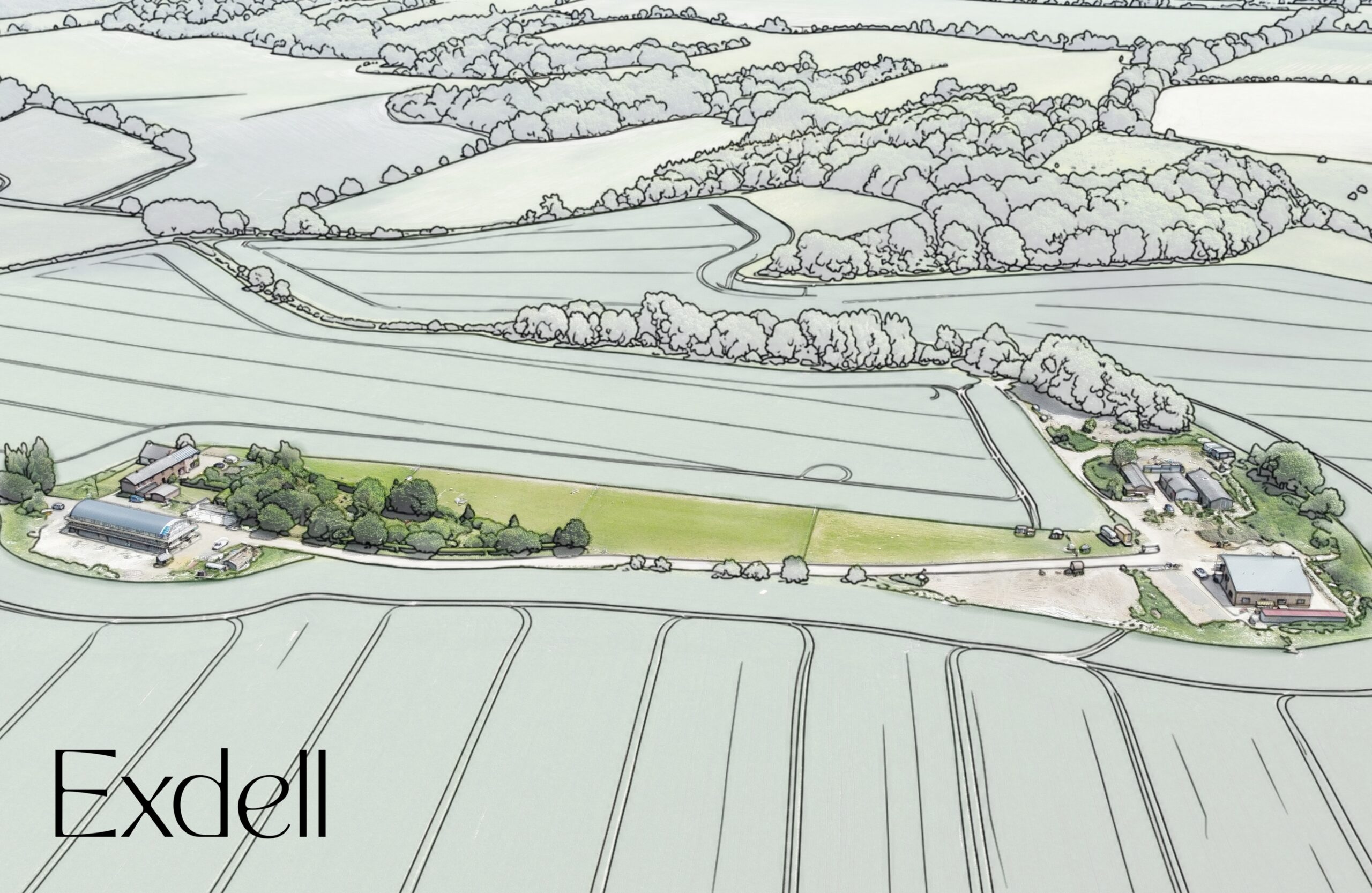
Farm Diversification Strategy: “You mustn’t be afraid to dream a little bigger”
One of my favourite quotations is from the movie Inception. A character is locked in a fierce gun battle with an anonymous baddie on a rooftop opposite. Actor Tom Hardy appears bearing a grenade launcher and quickly and dramatically ends the standoff, before turning to his friend (played by Joseph Gordon-Levitt) to state: “You mustn’t be afraid to dream a little bigger, darling.”
What does this fantastic one-liner have to do with Planning or Rural Diversification? Well, everything!
Quite often when introduced to potential farm diversification opportunities, we’re asked to look at individual buildings. There may be a specific building which is underused or is constructed or located in a way that makes it a fairly obvious choice for conversion. This is a perfectly valid approach, especially if the ambition is simply to make use of one or two redundant buildings. So many times, though, we find ourselves taking a step back to see a much bigger picture.
Many farmyards, whether historic or modern, are arranged as clusters of buildings around a central yard. Typically, those buildings will vary in size, construction, appearance and condition. Some may be well suited to commercial uses, others to tourism, storage, workshops, offices or residential conversion. Looking at the wider site as a whole rather than focusing on a single building can unlock opportunities that would otherwise be missed.
The most successful rural diversification schemes are rarely accidental.
They are carefully planned to create a place, not simply occupy a building. Rural enterprises benefit from scale because scale creates resilience. A single holiday let or one small commercial unit may provide supplementary income, but a broader mix of uses is often what creates long-term sustainability and resilience for a business. Multiple income streams can support one another, reduce risk and help businesses adapt as markets change.
This vision-led approach is key to maximising the benefits of rural diversification, starting with a simple masterplan that shows how an entire estate or farm can function after new projects are delivered.
This principle applies equally to residential conversion or development. Individual homes in the countryside can be exceptional when they sit within the right setting. Equally, single conversions can sometimes feel isolated or disconnected. Smaller clusters of homes or holiday accommodation within an existing farmstead can instead create a sense of place and a micro-community, giving developments a more settled and attractive character while still respecting the rural environment.
Location itself is often both the greatest attraction and the biggest challenge. Rural sites may not benefit from passing trade or high visibility, meaning the offer – along with marketing and branding – has to be strong enough that people actively choose to visit. Successful diversification projects therefore need to become destinations in their own right. Whether that is through high-quality accommodation, food and drink, leisure, retail or workspace, the aim should be to create somewhere people want to spend time. Just as importantly, once visitors arrive, there should be enough variety and activity to encourage them to stay longer and return again. Again, the vision-led approach is essential, helping to identify complementary uses which can operate alongside each other and the original farm operation to create an attractive rural destination.
Of course, that does not mean every diversification project needs to be delivered all at once. In many cases, converting individual buildings incrementally is an important part of a wider strategic approach. Smaller phases may be more acceptable to planning authorities than comprehensive redevelopment proposals, particularly in sensitive rural locations. A phased approach can also help landowners manage costs, test the market and refine future plans based on real-world demand and experience. Again, though, this doesn’t happen by chance; individual phases must be informed by an overarching vision and masterplan which clearly shows the bigger picture.
Permitted Development rights also play a significant role in unlocking larger opportunities.
Making the best use of Class Q and Class R rights can maximise the amount of usable floorspace and create valuable flexibility for future uses. Although these Rights can be limiting, they are a crucial stepping stone to larger, more comprehensive development. Used correctly, these routes can form part of a much broader strategy for a farmstead or estate, creating a platform from which wider diversification ambitions can grow.
At Exdell Ltd our role is to work with landowners to deliver diversification projects that genuinely work for them — commercially, operationally and strategically. We understand how to create thriving and attractive rural businesses that complement, rather than overshadow, the underlying farming operation. We work with owners to understand their ambitions first, as the drivers for diversification will be different in every case, as will the appetite to operate additional businesses or take on commercial or residential property.
Most importantly, we help clients look beyond the obvious single-building opportunity and consider the bigger picture. Because sometimes the best diversification projects start with a simple question: what if we dreamed a little bigger?
Whether you are considering the conversion of a single barn, exploring tourism opportunities, or planning a long-term strategy for an entire farmstead, Exdell Ltd would be delighted to discuss how we can help unlock the full potential of your rural assets.
Get in touch to see how we can support you
July 9, 2026


Be the first to comment