
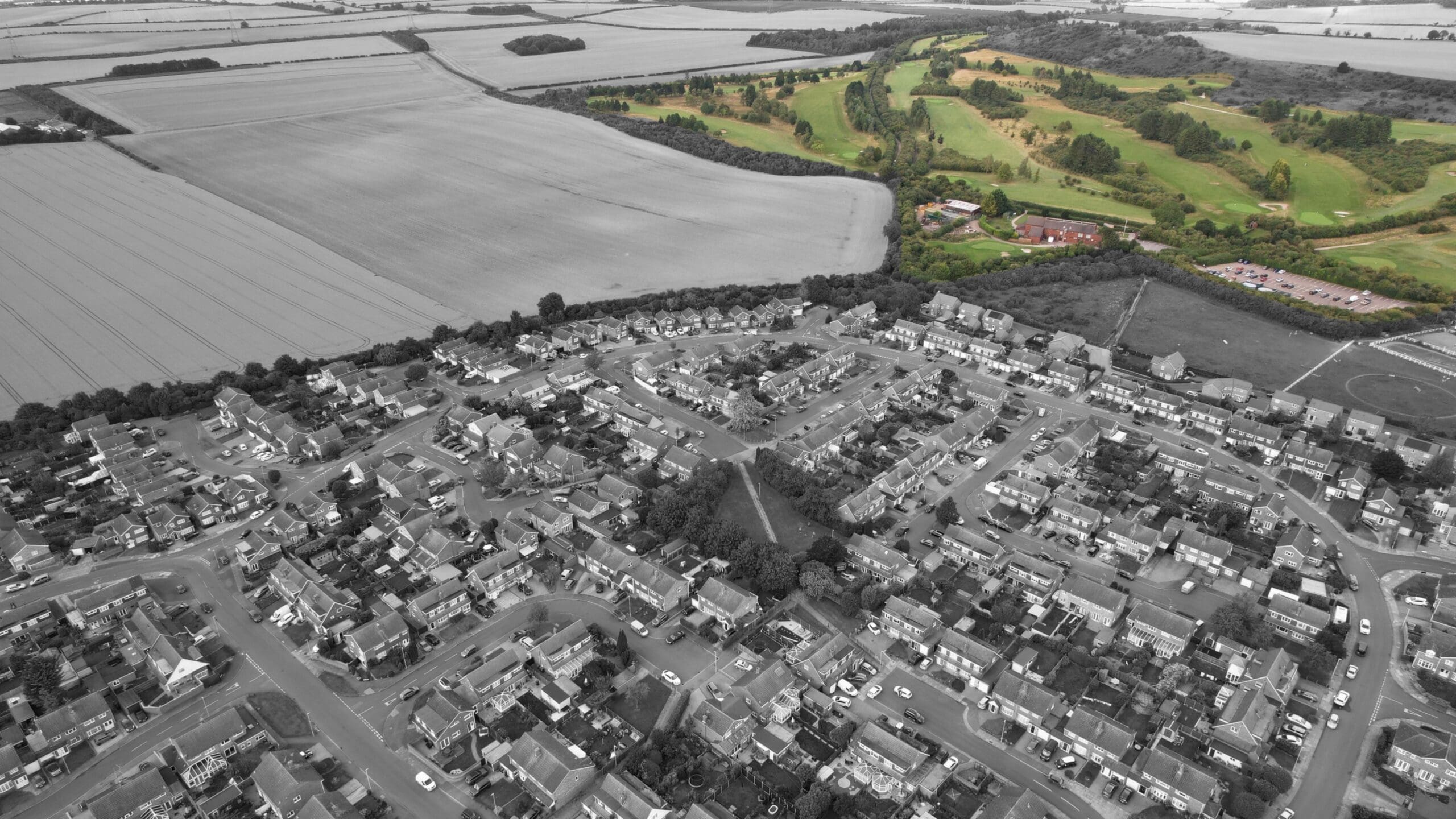
Countryside pursuits – the Policy gap
Having worked with a wide range of sport, leisure and hospitality venues to deliver new facilities, buildings and expansion projects, we’ve noticed a consistent issue: planning policy often struggles to keep pace with how countryside-based leisure businesses actually operate.
A common feature of many of the enterprises we support — Golf Clubs, Cricket Grounds, Padel Court operators, Equestrian Centres, Riding Arenas, and associated restaurants, cafés, hotels, gyms and wellness venues — is their setting. These businesses thrive in the countryside.
That should not come as a surprise. Sports facilities such as golf courses, cricket grounds and equestrian venues require extensive outdoor space, and the surrounding landscape is often central to the visitor experience. Even facilities located on the edge of urban areas frequently fall outside defined settlement boundaries and are therefore treated as “countryside” in planning policy terms.
This is where the challenge begins.
Local planning policy understandably draws a firm distinction between settlement areas and the countryside. The purpose is important: to direct development to sustainable locations and protect rural areas from inappropriate or excessive development. However, many of these policies are primarily written with housing and traditional commercial development in mind.
As a result, established sport, leisure and tourism businesses can find themselves caught in a policy gap. Existing venues may be successful, sustainable and well-used, yet policies often fail to properly account for the need to modernise, diversify or expand. In some cases, policies intended to prevent inappropriate countryside development can unintentionally restrict investment in valuable local facilities.
To give a recent example, we recently came across a case where planning permission for a new restaurant at an existing Golf Club was refused (not one of our applications, fortunately). The reason? The proposal failed a sequential test because (a) planning policy considers restaurants a purely ‘town centre’ use; (b) all such uses are therefore directed towards existing settlements and urban areas rather than countryside locations.
To a planner, that may sound logical – and it is, if you take this as a principle not a hard and fast rule. In practice, the outcome was completely counterintuitive. Most people would reasonably expect a busy, established Golf Club to include restaurant and hospitality facilities as part of its overall offer. Yet this is a perfect example of the disconnect that can arise when planning policies are drafted with insufficient flexibility. Policies are often written as a “one size fits all” approach which works well in most circumstances, but can overlook the operational realities and genuine needs of countryside sport and leisure venues.
Over the years, we’ve helped clients successfully navigate these challenges in a number of ways. A recurring theme is the importance of forward planning. Even if your project is still at the ideas stage, early engagement can make a significant difference later down the line.
1. Influencing Policy Before It Becomes Policy
Every local authority is required to prepare and maintain an up-to-date Development Plan or Local Plan. These documents shape how and where development takes place over many years and contain the policies used to assess planning applications.
Crucially, Local Plans are not written behind closed doors. They go through extensive consultation, giving businesses and landowners the opportunity to comment on emerging policies before they are adopted.
For larger venues or major expansion projects, the ultimate goal may be to secure a site allocation — a policy specifically identifying land for future development. While that can be difficult to achieve and may not be necessary for every proposal, there are often more realistic and equally valuable opportunities to influence wording, introduce flexibility or ensure policies properly recognise the role of countryside leisure businesses.
This process is frequently overlooked, but it can be one of the most effective — and cost-efficient — ways to support long-term business objectives.
If you have any plans to deliver projects in the future – new buildings, new facilities, improved access and parking – we think it’s essential to engage with Planning Policy as soon as possible. It can be relatively simple to influence policies and simply raise awareness; the impact this can have is invaluable.
2. Engaging with Councillors Early
Local Councillors can be one of the most valuable voices in the planning process.
Councillors represent both residents and businesses within their wards and will be well aware of the contribution local sport, leisure and tourism venues make to the wider area — whether through employment, tourism, community facilities or local identity.
Early conversations with Councillors can help build understanding around a proposal before a planning application is submitted. In many cases, they can also help identify local priorities, sensitivities or opportunities which may influence how a scheme is presented.
While ward Councillors are usually the first point of contact, portfolio holders responsible for areas such as Leisure, Tourism, Sport, Economic Development or Employment can also be particularly helpful stakeholders to engage with.
Importantly, engagement should not be seen as lobbying — it is about ensuring decision-makers understand the operational realities and wider benefits of countryside-based businesses. The engagement is a two-way process with Councillors playing an important role in identifying any potential issues or concerns to overcome, and in shaping proposals that come forward.
3. Building a Robust Planning Case
Success always depends on the quality of the planning application itself.
Planning policies are not supposed to be rigid rules; they are part of a wider planning balance. However, decisions should be made in accordance with the Development Plan unless material considerations indicate otherwise.
That means a strong planning strategy is often about demonstrating why a proposal deserves support, even where there may appear to be some conflict with certain policies.
For countryside sport, leisure and hospitality projects, this can involve showing that policies should be interpreted flexibly, that certain restrictions were never intended to apply to existing venues, or that the wider benefits of a proposal clearly outweigh any perceived harm.
Those benefits are often substantial:
- Supporting local employment
- Increasing visitor numbers and tourism spend
- Improving local amenities and facilities
- Diversifying rural businesses
- Enhancing the long-term viability of established venues
- Delivering health, wellbeing and community benefits
The strongest applications are rarely just about buildings. They tell the wider story of the business, the venue and its contribution to the area.
Looking Ahead
Sport, leisure and tourism businesses in the countryside occupy a unique position within the planning system. They are often highly sustainable, long-established and economically valuable, yet policy frameworks do not always reflect their operational needs or future ambitions.
The good news is that these challenges can be addressed with the right strategy and early engagement.
Whether you are considering a new leisure facility, expanding an existing venue, diversifying your offer or simply trying to understand the policy landscape around your site, getting advice early can create opportunities and avoid costly delays later on.
If you would like to discuss a project, explore future development opportunities or review how emerging planning policy may affect your business, please get in touch.
June 19, 2026


Be the first to comment